
Leak tracing from the top down
The contractor checks penetrations, valleys, transitions, and the attic side when accessible to track how water is moving, not just where it drips.
Serving Garland, Texas & surrounding areas
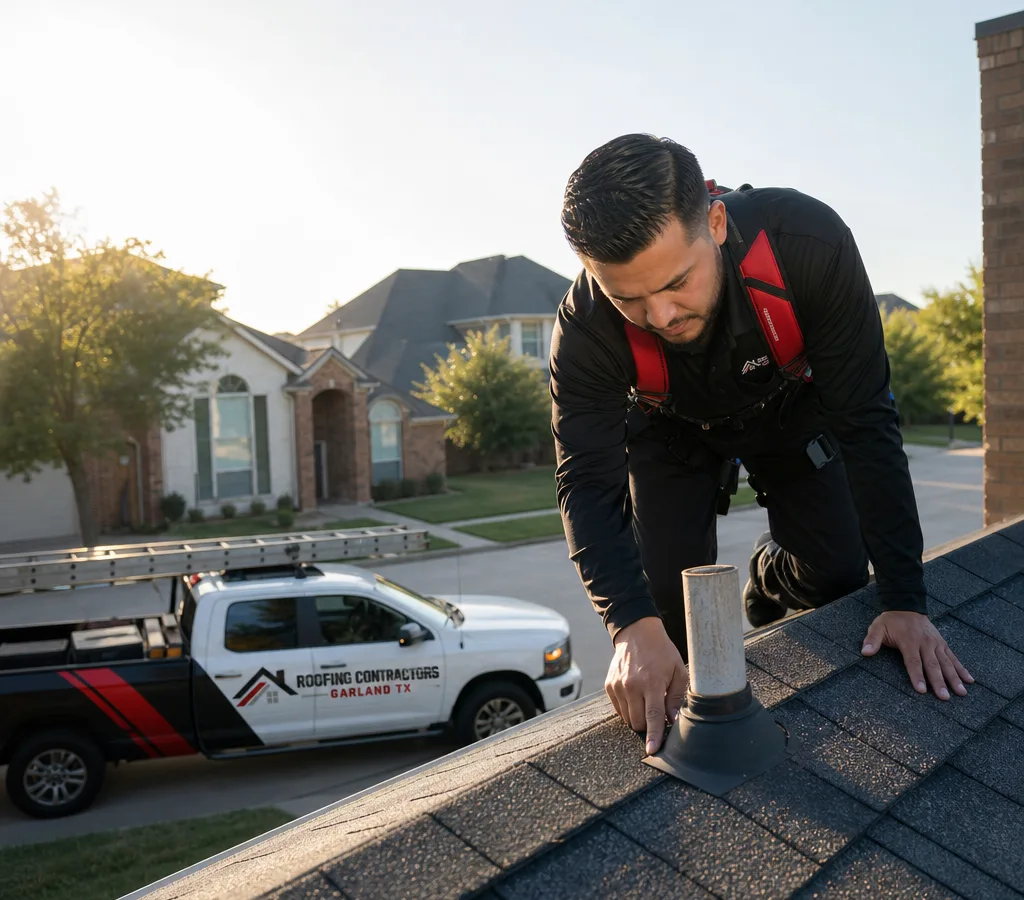
Roof Repair • Garland, Texas
One call connects you with an experienced local roofing contractor who can inspect, explain options, and handle the repair.
CALL NOW: (972) 882-9205Looking for roof repair in Garland usually starts with a ceiling spot, a drip at a vent pipe, or shingles that look out of place after wind and hail. The important part is that the water you see inside rarely lines up with the entry point. Water can travel along decking, rafters, and underlayment before it shows up.
A good Garland roofing repair begins with finding the actual pathway, then restoring the layers that make a roof work as a system: the exterior covering, underlayment, flashing, and ventilation. Many recurring leaks come from the details, not the field shingles. Valley metal, step flashing at a wall, pipe boots, chimney flashing, and the drip edge at the eaves are common culprits.
We're a referral service. When you call Roofing Contractors Garland TX, an automated line asks which service you need and your ZIP code, then connects you with an independent local contractor who handles roof repair in Garland and nearby neighborhoods.
If you're still deciding who to talk to, start with how you want the inspection to go: clear explanation of the cause, repair options that match the roof type, and what the contractor will do to prevent the same leak from reappearing in the next storm. Many homeowners begin by calling roofing contractors in Garland to compare approaches and availability without starting from scratch each time.
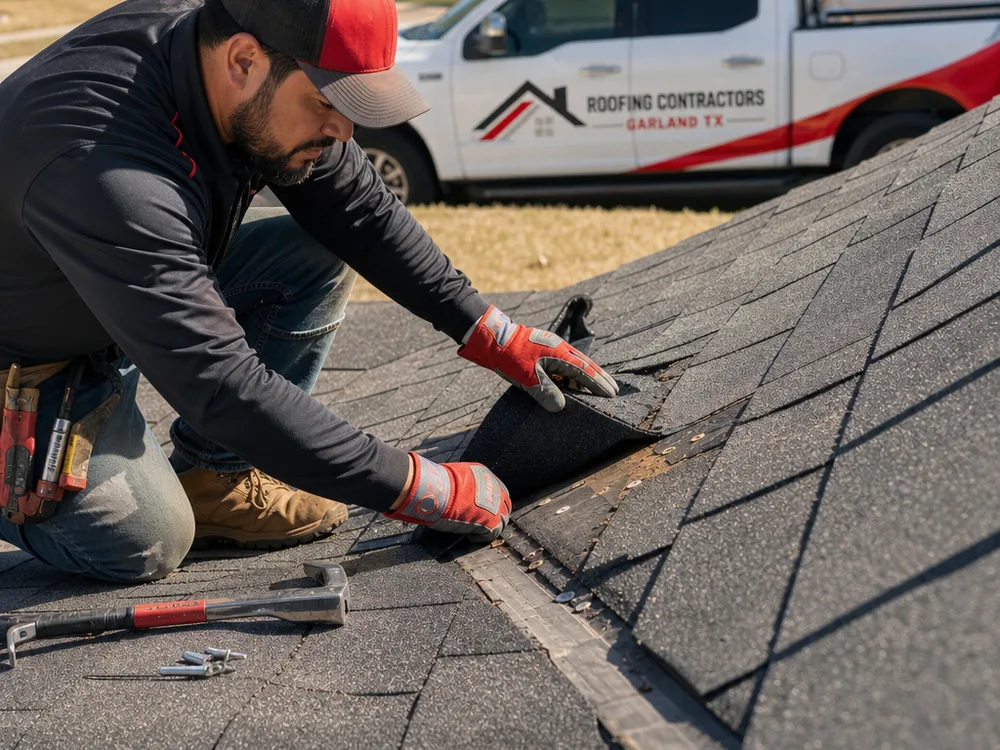
The contractor checks penetrations, valleys, transitions, and the attic side when accessible to track how water is moving, not just where it drips.
Step flashing, counter flashing, pipe boots, and vent flashing are inspected for gaps, cracking, or loosened fasteners that let wind-driven rain in.
Missing tabs, lifted edges, exposed nails, and improper nailing can turn a small area into a repeating leak point during storms.
If water has been present for a while, the contractor looks for soft decking, delamination, and damaged underlayment that may need localized replacement.
Some “roof leaks” are condensation issues. Bathroom fan ducting, attic ventilation balance, and insulation contact points can matter as much as the shingle.
Once the line connects you, mention where you see water, when it happens, and whether your roof covering is asphalt shingles, metal, or tile.
The contractor usually checks penetrations, valleys, edges, and wall intersections first, then confirms from inside when the attic is accessible.
You'll hear what failed, what needs removal, and what gets replaced or resealed so the repair addresses the cause.
Damaged shingles are removed, the area is prepared, and flashing or underlayment is repaired before replacement shingles are installed.
The contractor confirms overlap direction, seal points, and flashing integration so water sheds onto the roof surface instead of behind it.
Leak, lifted shingles, or storm damage? One call connects you with a local roofer.
CALL NOW: (972) 882-9205
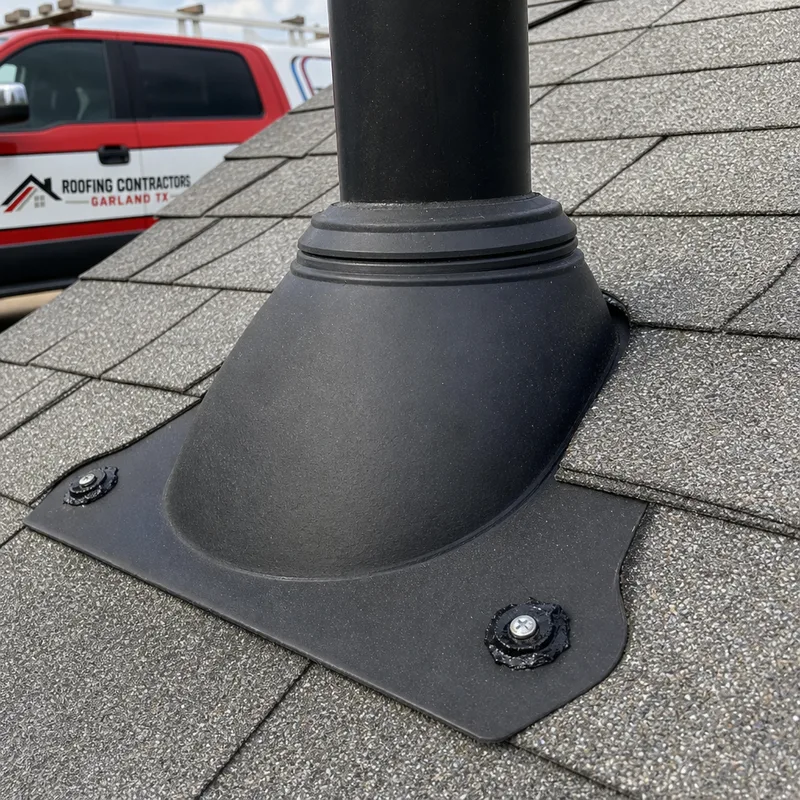
The rubber collar around a plumbing vent dries out and cracks. It is a small part, and one of the most frequent leak sources on shingle roofs.
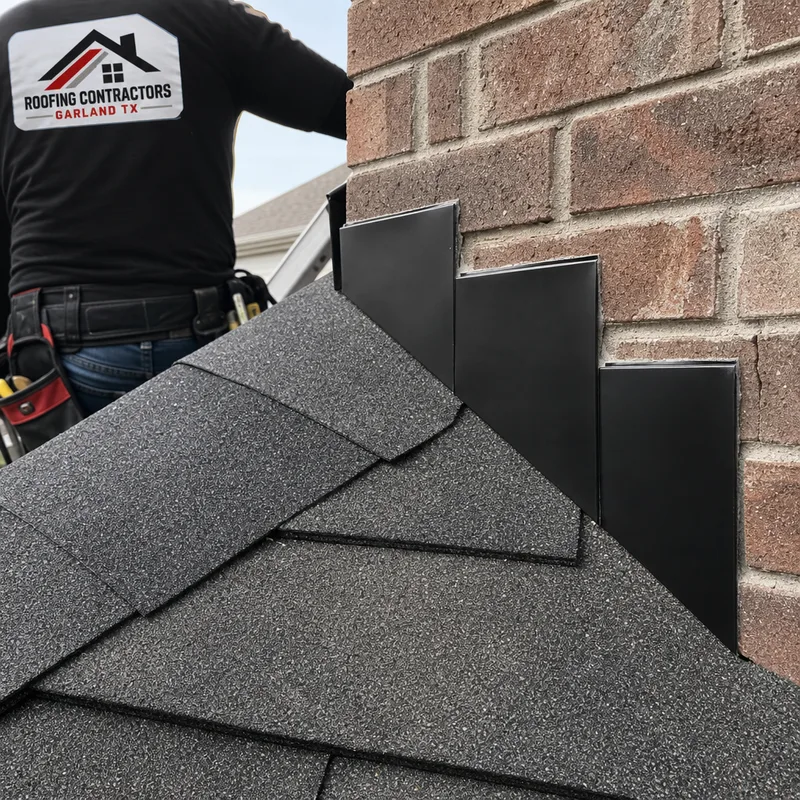
Where a roof slope meets a wall or chimney, layered metal flashing keeps water out. Missing pieces, rusted metal, or dried-out sealant let it in.
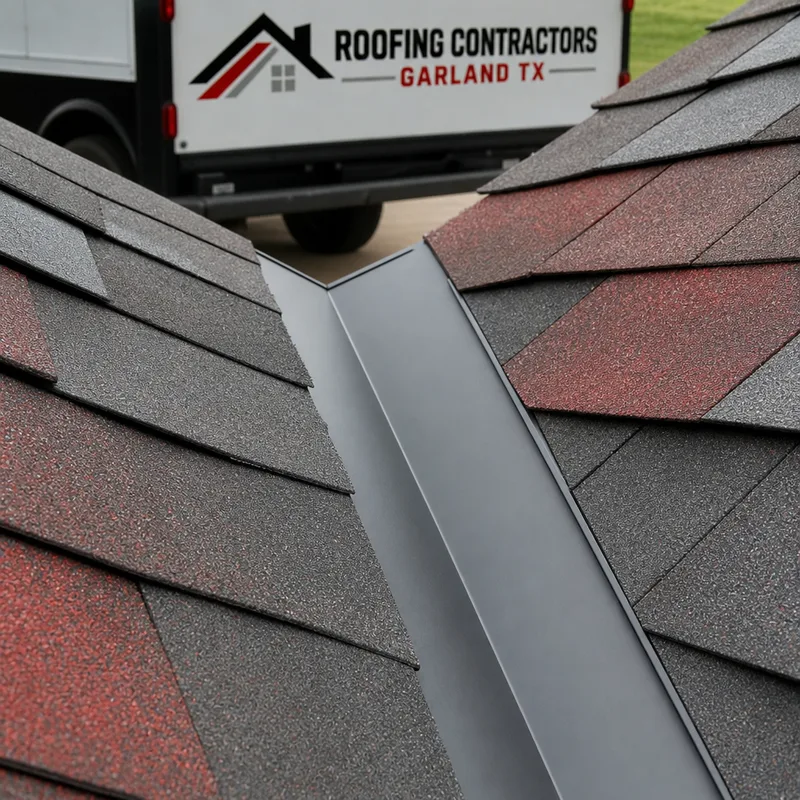
Two slopes drain into a valley, so it handles the most water. Debris, worn shingles, or damaged valley metal cause leaks that show up far from the valley itself.
Nails work loose over years of heating and cooling and push the shingle above them up. Wind-driven rain finds the gap.
Skylight flashing and the drip edge at the eaves are common trouble spots, especially when gutters overflow.
Most roof repairs in Texas run about $300 to $2,500, and a typical single-problem repair lands well under $2,000. Small jobs such as a pipe boot or a few shingles sit at the low end. Valley work, wall flashing, and decking repairs cost more. A straightforward leak repair typically costs $300 to $1,200.
These are typical ranges from published cost guides, including Angi and RoofVista, not quotes. Prices in the Dallas area tend to run toward the higher end, and the contractor you speak with sets the price after seeing the roof.
The contractor traces the water path by inspecting common entry points first—pipe boots, wall intersections, chimneys, and valleys—then confirms how the roof layers are lapped in that area. The visible interior drip is often downstream from the entry point.
Write down when the leak happens, where you see it, and whether you noticed missing or lifted shingles outside. If you can do it safely, take photos from the ground. Avoid getting on the roof, especially after storms when surfaces can be slick.
Missing shingles can be a straightforward repair if the surrounding shingles, underlayment, and decking are in good shape and the damaged area is limited. Broader work may be appropriate when the covering is brittle or multiple areas show widespread wear.
Yes. Moist air from bathrooms or laundry areas can condense in an attic and look like a roof leak. A contractor may check fan ducting, attic ventilation, and insulation contact points to determine whether moisture is forming inside.
It generally involves removing damaged shingles, inspecting the underlayment and decking, repairing or replacing flashing or a pipe boot when needed, then installing replacement shingles and restoring correct water-shedding layers.
The contractor usually tries to match shingle type and color as closely as possible, but an exact match may not be available on older roofs or discontinued colors. Sun fading can also make a newer shingle look different initially.
You call, choose your service, and enter your ZIP code, and the line connects you with a local independent contractor who does roof repair in Garland. You discuss the inspection, repair approach, and any quote details directly with the contractor, and you decide whether to move forward.
Leaks that appear only in wind-driven rain usually point to flashing, vents, or lifted shingles, where water is pushed sideways or uphill. Leaks in every rain suggest a more direct opening.
No. Attic condensation, a leaking air-conditioning drain line, or plumbing can all stain a ceiling. A contractor checks the attic to tell the difference.
Catch the water, move belongings, and take photos. Do not go on the roof. If water is pouring in or the ceiling is sagging, treat it as an emergency roof repair.
Call, choose your service, and enter your ZIP code. You'll be connected with an experienced local Garland roof repair contractor so you can get a clear plan and decide what's next.